
Showing 1,529 results

Rebecca Bratspies | August 17, 2026
Teaching right now is no joke! This is especially true of teaching environmental law. Most of us teaching in this area have dedicated our professional lives to protecting the environment — the air, the water, the land, and of course the people who breathe that air, drink that water, and live on that land. Each day is more painful than the last as our work is dismantled in front of our eyes. Institutions that seemed solid bulwarks against tyranny are crumbling into dust. In this moment of crisis, fellow Member Scholar Carmen Gonzalez and I set out to write a book for our fellow professors struggling to find their feet — consider Teaching Environmental Law in Context a kind of love letter to the better world we are convinced we can build together with our students.

Robert Verchick | August 10, 2026
It’s August here in western Washington State, which means two things: (1) I’ll soon be packing up for my return to New Orleans (class starts soon), and (2) the smoke blowing in from regional wildfires is making my nose burn. Appropriately, the news here is full of stories about personal loss, evacuation routes, fire-suppression strategies, and the brave firefighters who put their lives on the line to keep us safe. But there’s a deeper story: Our broad approach to handling wildfire in the United States was designed for a climate that no longer exists. We must do better.
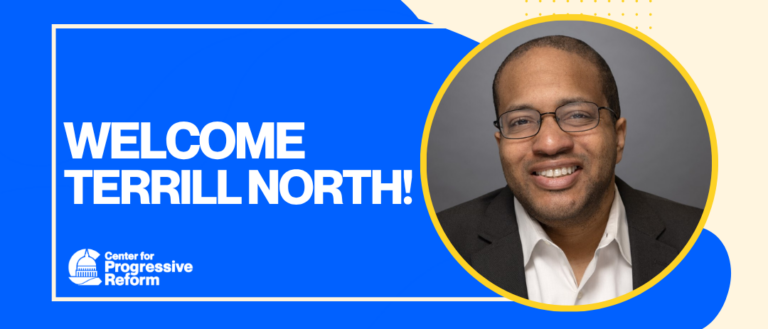
Terrill North | August 3, 2026
This is a hard moment for the work we care about. The rules that keep our air breathable, our water clean, our workplaces safe, and our government answerable to the people are under real pressure. Agencies are losing the authority to do their jobs. The idea that government should protect people when markets will not is being treated as if it were up for debate. And the communities that suffer most from pollution, unsafe work, and a warming climate are still the last ones invited into the rooms where the choices get made. I spent my childhood two blocks from a power plant grandfathered out of Clean Air Act protections in Texas and suffered from chronic bronchial infections while multiple family members and friends managed asthma. In law school, I learned to value the regulations and bureaucracy that could be made to protect people’s lives. So I am honored to join the Center’s work as executive director.

Brian Gumm, Bryan Dunning, Catalina Gonzalez, Federico Holm, James Goodwin, Rachel Mayo, Sophie Loeb, Tara Quinonez | July 3, 2026
As the United States reaches the 250th anniversary of the Declaration of Independence, we at the Center for Progressive Reform find ourselves reflecting on a history that is both extraordinary and in progress. We also recognize that this anniversary carries different meanings for different people. Skye Perryman, President and CEO of Democracy Forward, puts it […]

Bryan Dunning | June 30, 2026
PJM, the regional transmission organization (RTO) responsible for grid operations in all or part of 13 Eastern U.S. states and Washington, DC, just asked the federal Department of Energy (DOE) to issue an emergency order under the Federal Power Act. In its request, PJM asked to allow for “large loads” (functionally, although not limited to, data centers located in the PJM footprint) to run emergency backup power generation between July 1 and July 2. This is in preparation for the extreme multi-day heatwave that is forecast for the eastern part of the country through the July 4 holiday weekend.

Sophie Loeb | June 9, 2026
Across the country, legislators are figuring out how to regulate the worst harms from data centers. In North Carolina, the latest bill to do so is Senate Bill 730. Unfortunately, SB 730 is not a step forward in protecting North Carolinians from the harms of data centers. Rather, it is a step sideways, evading needed regulations.

Alejandro Camacho, Robert L. Glicksman | May 21, 2026
This excerpt is from a commentary originally published in The Conversation. In recent years, at least two dozen local and state governments have sued petroleum companies to recover the billions in costs they have incurred responding to and rebuilding after flooding, storms and wildfires – all of which have been worsened by changes to the […]

Alejandro Camacho | May 5, 2026
The Trump administration recently repealed the U.S. Environmental Protection Agency’s 2009 endangerment finding—the scientific and legal determination that greenhouse gases threaten public health and welfare that has anchored federal climate regulation for nearly two decades. Environmental Protection Agency Administrator Lee Zeldin called the finding “the Holy Grail of federal regulatory overreach.” Within weeks, a coalition of more than 20 states filed suit in the U.S. Court of Appeals for the D.C. Circuit to reverse the repeal. The legal battle that follows will help define American environmental policy for a generation. Brigham Daniels and I did not plan the timing of our new book, Lessons for a Warming Planet: A Vital History of US Environmental Law, to coincide with this particular legal conflict. But we could not have chosen a more clarifying moment for its release. The endangerment finding repeal is not an aberration—it is a recognizable recurrence in a history that stretches back centuries. Law has always been the primary engine of both environmental exploitation and protection in the United States.

Bryan Dunning | May 4, 2026
On April 23, the Baltimore Sun published an op-ed lambasting efforts by localities and states to hold the fossil fuel industry responsible for decades of misinformation about the dangers of their products. These hazards to the public’s health, welfare, and safety are now coming home to roost in the form of extreme weather, increased flooding […]