
Showing 3,008 results
Robert Verchick | September 29, 2026
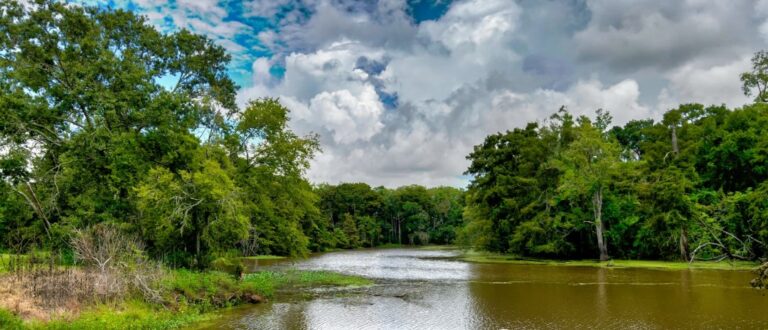
They’re so cute! Earlier this month, thousands of baby redfish arrived by trailer at West Cove, on Louisiana’s southwestern coast. Volunteers then carried them in buckets to waiting boats, which motored them into nearby canals for release. That was the beginning of their lives in the wild. Until then, they had been growing in a hatchery. In all, about 150,000 young redfish (also known as red drum) were released in the Calcasieu Lake estuary, the Rigolets and waters near Grand Isle. Hatcheries give redfish a good head start. The rest depends on the habitat.

Zygmunt Plater | September 28, 2026
I wish to confirm that for environmental law teachers new and old — whatever our theological leanings — Rebecca Bratspies and Carmen Gonzalez have created a godsend. In a time of existential national turmoil, with previously solid legal ground as well as a host of mileposts being undermined at every turn, here is a welcome book for teachers. Teaching Environmental Law in Context reminds us that what we strive to do is essential, and Rebecca and Carmen’s lively, intricately detailed how-to manual shows how we can still do it well despite the current abysmal context.
Andrea McArdle | September 23, 2026
What draws students to a class in environmental law, and after enrolling, what sustains them? The draw is surely the urgency of meeting this moment of escalating environmental and climate-based threat. The second question — what keeps students going? — points to the challenges inherent in studying the subject itself.

Victor Flatt | September 21, 2026
I don’t know how many times I have had the conversation with other environmental law professors about how difficult it seems to be to teach the subject. The usual talking point is that students come to environmental law anxious to save the world, but instead we tell them to save the PDF file of the latest National Ambient Air Quality Standard rulemaking, whose hundreds of pages they can then pore over in the next week. Oh, I try to still make it as interesting as I can by trying to ground it in something they may be familiar with, but I have also felt the responsibility to show them what the “real practice” of environmental law is like. Turns out I wasn’t the only one thinking more deeply about the environmental law teaching problem. Thanks to Rebecca Bratspies and Carmen Gonzalez, now we can all have a resource that solves the problem of grounding environmental law into lived experiences — things that really matter to students.

Alejandro Camacho, Robert L. Glicksman | September 17, 2026
On the morning of December 30, 2021, the Marshall Fire ignited in Boulder County, Colorado. Driven by hurricane-force winds and fueled by vegetation desiccated by years of drought, it burned more than six thousand acres and destroyed over one thousand homes in a matter of hours — the most destructive wildfire in Colorado history. Boulder County’s lawsuit against Suncor Energy and Exxon Mobil Corporation, filed in state court in 2018, seeks to recover those costs from the companies whose products allegedly caused them. The suit rests not merely on the claim that fossil fuel combustion drives climate change, but on the more specific and more serious allegation that the defendant companies spent decades concealing the relationship between their products and climate harm while actively marketing those products to a public kept deliberately uninformed of the consequences.
Alice Kaswan | September 16, 2026
For the average law student, climate change looms as an existential threat, appearing simultaneously catastrophic and oddly invisible. Teaching Environmental Law in Context by Rebecca Bratspies and Carmen Gonzalez documents the federal government’s failure to adopt comprehensive climate legislation and, to the extent that prior administrations had adopted measures under existing laws like the Clean Air Act, the Trump administration’s evisceration of those measures. Can the states pick up the slack? Given most states’ history of weak environmental regulation, driven by their fear of losing economic development and their lack of resources, what can we expect?
Robert Verchick | September 15, 2026
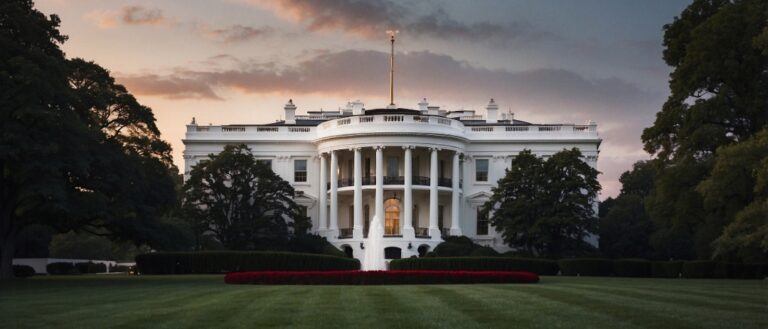
The U.S. Supreme Court recently cleared the way for President Donald Trump to keep building his garish ballroom, complete with gilded columns, gold chandeliers, and a “drone-proof” roof. The decision might look like a one-off fight over historic preservation, but some legal scholars fear the blast zone is much wider. The real question is more fundamental: who gets to ask a federal court to stop an allegedly unlawful project?

Steph Tai | September 14, 2026
Teaching Environmental Law in Context is a fantastic resource, not only for law professors, but for professors of environmental studies and other adjacent fields. I can’t begin to tell you all the number of times that my colleagues at the University of Wisconsin Nelson Institute for Environmental Studies (as well as colleagues in Environmental Science, Community and Environmental Sociology, and Geography) have asked for a primer like this with respect to environmental law. I am asking our library to get this book right now.
Anastasia Telesetsky | September 10, 2026
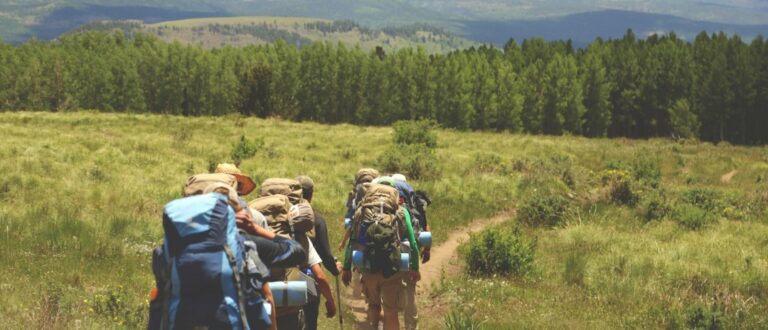
These are challenging times for environmental management because we are losing our social cohesion and are increasingly detached from the lives, both human and more than human, around us. Political scientist and sociologist Robert Putnam has been diagnosing and re-diagnosing this problem in his books like Bowling Alone: The Collapse and Revival of American Community. We no longer have common purpose with repeated interactions either with each other or with our environment. We have what former Surgeon General Vivek Murthy referred to as “our epidemic of loneliness and isolation,” as well as what journalist Richard Louv labeled the “nature deficit.” It is in this time where we need to be reconnecting with our neighbors and learning from nature at large that the engaged teaching materials in Rebecca Bratspies and Carmen Gonzalez’s Teaching Environmental Law in Context offer a real opportunity for environmental studies students, law students, and lawyers to reflect on how we can grow in solidarity through shared knowledge.