
Showing 527 results

Marcha Chaudry | February 16, 2023
February started with news that's all too familiar in the United States: An incident involving highly toxic industrial chemicals sparked a large fire, threatening an explosion, forcing evacuations, and putting workers and community members directly in harm's way. In this case, the danger came from a derailed train in Ohio that was hauling cancer-causing vinyl chloride, used to make certain types of plastic; toxic phosgene, an industrial chemical that was also used as a chemical weapon in World War I; and other substances. But extreme, acute threats like the Ohio derailment aren't the only toxic chemical dangers facing workers and surrounding communities.
James Goodwin | February 9, 2023
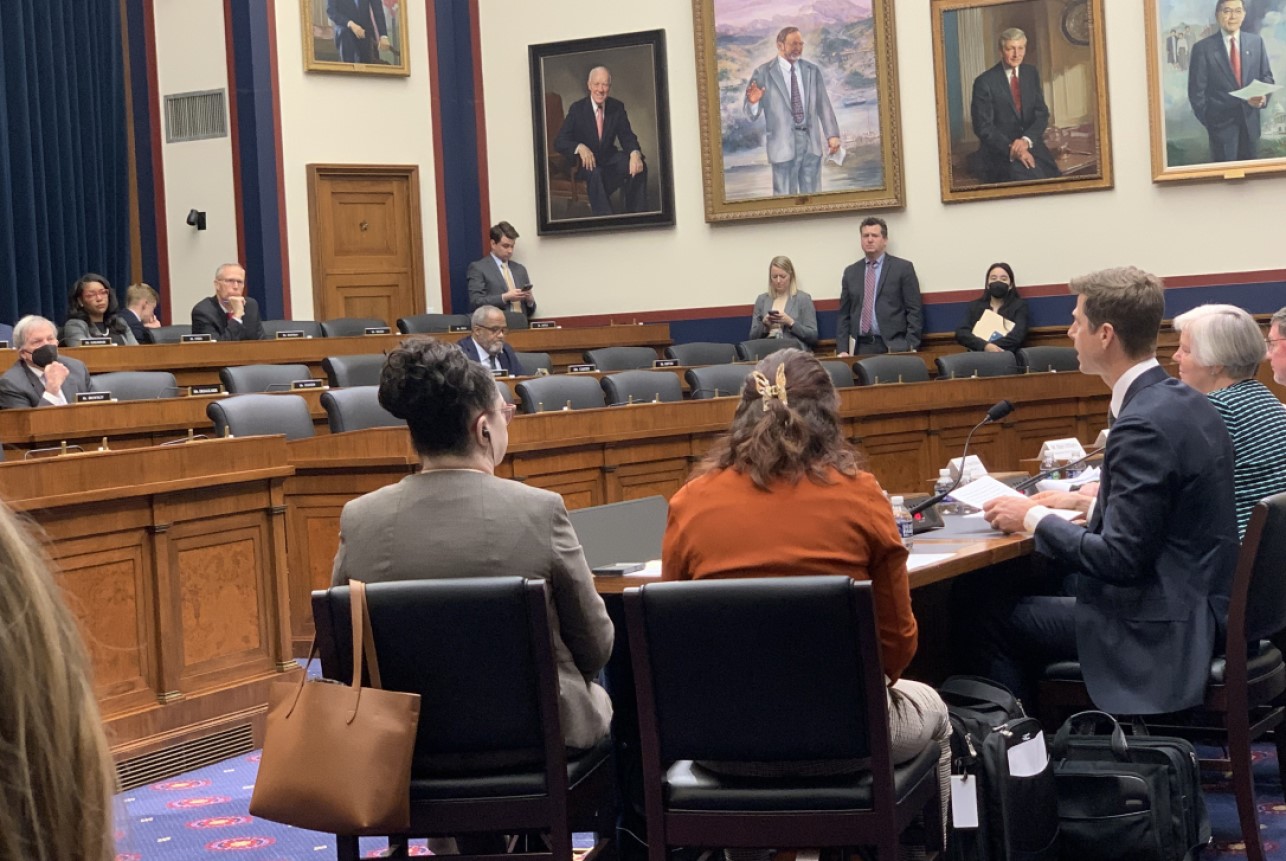
On February 8, conservatives in the U.S. House of Representatives began their assault on the Clean Water Act with a hearing aimed at attacking the Biden administration’s rule to more clearly define the law's scope of protections. Center for Progressive Reform Member Scholar Dave Owen, a law professor at the University of California College of the Law in San Francisco, was the only witness invited to fend off these dangerous attacks.

Allison Stevens | February 8, 2023
In his second State of the Union address, President Joe Biden hailed his administration’s significant accomplishments over the last two years and called on lawmakers to “finish the job” on a wide variety of policy issues. He uttered the phrase over and over — more than a dozen times, in fact — in relation to everything from repairing the economy and controlling the cost of prescription drugs to expanding access to affordable health insurance and making the tax code fairer. About a third of the way through his 73-minute speech, he called on the country to “finish the job” when it comes to climate change.

Daniel Farber | February 7, 2023
In their crusade against “wokeness,” congressional Republicans are taking aim at a Labor Department rule about pension plan investments. The rule’s transgression is apparently that it makes it easier for pension plans to consider how climate-related risks might affect a company’s bottom line. To avoid being woke, the GOP would apparently prefer pension managers to close their eyes to financial realities, sleepwalking their way through the climate crisis. The real fear, of course, is that more wide-awake investment might disfavor some of the GOP’s biggest corporate supporters.

James Goodwin | January 31, 2023
Where are President Joe Biden’s regulatory process reforms? That’s the question many progressive advocates have been asking since the administration released its Day One memo inaugurating a “process with the goal of producing a set of recommendations for improving and modernizing regulatory review.” Two years later, this process remains in limbo.

Robert L. Glicksman | January 17, 2023
The U.S. Environmental Protection Agency (EPA) and its environmental regulatory state partners have engaged in many important successful efforts to foster compliance with regulatory obligations through enforcement actions and otherwise. But in her new book, Next Generation Compliance: Environmental Regulation in the Modern Era, Cynthia Giles documents widespread and significant noncompliance with these obligations.

Daniel Farber | January 10, 2023
There are U.S. Supreme Court cases going back a century or more dealing with what we would now consider environmental issues, such as preserving nature or air pollution. But when did the Court start seeing filthy rivers and smoky cities as embodiments of the same problem, despite their striking physical differences? And when did it start thinking of “wilderness” as a good thing rather than a failure to use available resources?

Allison Stevens | January 4, 2023
Greetings from sunny San Diego, where the Center for Progressive Reform is gathering alongside the annual Association of American Law Schools conference to celebrate 20 years of impact and explore legal and policy changes that would secure a more sustainable climate and a more just transition to clean energy. Also at the top of our agenda: celebrating our invaluable Member Scholars.

Daniel Farber | January 3, 2023
Here we are, starting another year. Last year turned out to have some major environmental developments. The most notable were the U.S. Supreme Court’s ruling in the West Virginia v. EPA case, striking down the Clean Power Plan, and the passage of the Inflation Reduction Act, with its huge economic incentives for clean energy. Here’s a quick rundown of what 2023 might hold in store.