
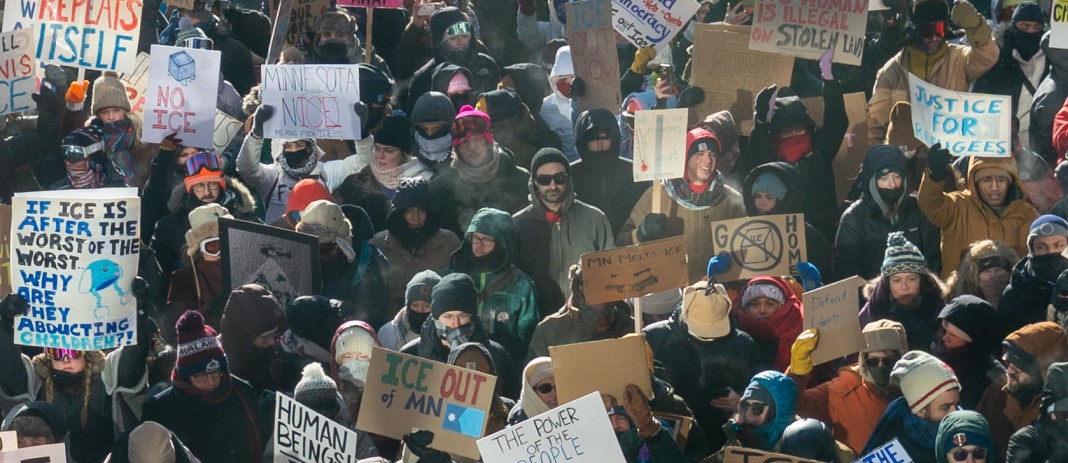
This post is the first in a series of reflections about Latino Heritage Month, the disenfranchisement of immigrants and people of color in the United States, and how systemic racism and oppression damage our democracy and worsen the impacts of climate change and other environmental harms.
Over the past month, we celebrated the culture and many contributions of Latinos in the United States, which have touched every facet of American society. However, one month is not enough to truly honor the presence, full history, diversity, and intersectional identity of Latinos (or any other group, for that matter) in the United States.
It’s perhaps more important than ever to continue to reflect and learn from similar moments throughout U.S. history in which U.S. government policies have disenfranchised, criminalized, and called for the detention of Indigenous people and immigrants of many different backgrounds and countries of origin. As early as 1790, U.S. policy denied citizenship to any non-white person, including Native Americans, slaves, and freed slaves. Throughout different times in its history, U.S. policy has also targeted and excluded immigrants from Southeast Asia, China and Japan, Mexico, Central America, the Caribbean, Africa, the Middle East, and Southern and Eastern Europe from human rights and citizenship.
In more recent history, on day one of his second administration, President Donald Trump issued an executive order that called for excluding from birthright citizenship children born to certain categories of noncitizens, even when those children are born in the United States. A second order issued in 2026 seeks to prevent non-citizens from giving birth in the U.S. at all. Thus far, the U.S. Supreme Court has defended birthright citizenship as written in the Fourteenth Amendment, but the administration continues to press ahead in seeking exclusions.
Especially during a time when the culture, history, and safety of all immigrant communities and individuals with marginalized identities in the United States are under attack by the Trump administration — most immediately through immigration enforcement and detention and also directly through an agenda of deregulation — we should not look away or ignore the fact that we are living through a very dark chapter in America’s story. Especially for Latinos and anyone with an immigrant background, a nightmare continues to unfold.
As a direct result of the expansion of violent, illegal immigration enforcement actions by the Trump administration, many lives have been lost, countless families have been destroyed, justice has been delayed, and millions of American dreams have been deferred. To date, at least 61 people have been killed in our country at the hands of the Trump administration and federal officers as a direct result of the expansion of immigration enforcement and detention that are being carried out in violation of legal pathways to immigration and revocation of humanitarian and asylum programs. Countless others have also lost their lives as a direct result of being separated from their families by either suicide, being separated from their primary caretaker, being denied medical care, and other unknown reasons.
As of August 2026, Immigration and Customs Enforcement (ICE) has arrested at least 500,000 immigrants, including 8,952 children, elderly people, disabled people, and pregnant women. An overwhelming majority of those detained had no criminal record and were following immigration laws and court procedures. Over 500 U.S. citizens have also been detained, and more than 23,000 undocumented immigrants have been deported to a country other than their country of origin. At least 60,000 remain detained in inhumane conditions, including children, across 400 active for-profit detention centers that are funneling billions of taxpayer dollars to private prison contractors, facility owners, and operators who are carrying out horrific acts for maximum profit — without transparency and accountability.
What these numbers mean is that thousands of valued members of our communities have been violently removed and disappeared. Countless more remain locked down at home and unable to work, attend school, or take their children to parks, and they’re unable participate in public or civic life out of fear. Many continue to rely on their children, friends, and the kindness of neighbors, volunteers, and advocates for mutual aid and access to basic necessities, legal services, and a lifeline to society.
The sense of fear and psychological terror that the presence and aggression of federal officers in schools and public places like parks have instilled in communities all over this country —especially among children — has been chilling and should never be normalized. By attempting to condition access to federal funding and resources with agreements and cooperation of local and law enforcement, the Trump administration is also attempting to further erode and undermine public trust and participation at all levels of not only federal, but also state and local government, even causing many to question our sense of belonging in our own communities.
These violent and inhumane actions will leave a permanent mark and trauma among immigrant families and communities as a whole. These actions are also a central pillar in the Trump administration’s implementation of Project 2025, the Heritage Foundation’s blueprint for weaponizing the federal government to advance an authoritarian and white supremacist agenda, and further extract and consolidate public resources into the hands of a small few. The Trump administration continues to implement many actions and policy changes outlined in Project 2025 on immigration, education, healthcare, employment, and civil rights, and it’s doing so through Congress, administrative procedures, regulation and deregulation, the courts, and executive control of federal agencies. All of these actions are designed to harm and have immediate effect on all immigrants, especially Latinos.
In the next two parts of this series, we will further explore and expand on how racism, federal disinvestment, deregulation, and attacks on voting rights will have far-reaching, generational effects, not only on Latinos and immigrants, but also U.S. citizens, including naturalized citizens, mixed status families, Americans whose primary language is one other than English, and all citizens, families, workers, and communities in the U.S. and beyond.
Banner image by Lorie Shaull, used under Creative Commons license CC BY 4.0.
