Showing 33 results
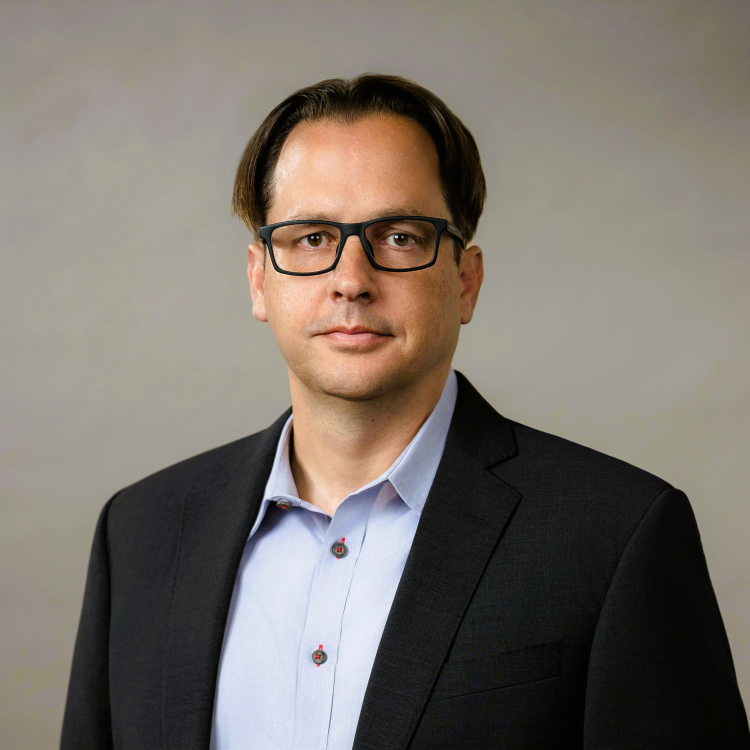
Professor of Law
Alejandro Camacho is Chancellor's Professor of Law at the University of California, Irvine, and Faculty Director, UCI Center for Land, Environment, and Natural Resources. He has a joint appointment in Law and Political Science. He also serves on the Board of the Center for Progressive Reform.

Alejandro Camacho, Brian Gumm | November 16, 2026
Following the U.S. Senate’s November 9 vote to move forward with debate on the so-called Bipartisan American Affordability and Jobs Act of 2026 (BAAJA, S. 5653 / H.R. 2347), more than 90 legal scholars from across the country signed a letter we drafted urging senators to strip 12 particularly harmful provisions from the permitting bill during the amendment process. If those provisions remain when debate concludes, the scholars urged senators to vote “no” on final passage.
Alejandro Camacho | November 9, 2026
The so-called Bipartisan American Affordability and Jobs Act of 2026 (BAAJA, S. 5653) is the “four corners” permitting deal from Sens. Shelley Moore Capito, Mike Lee, Sheldon Whitehouse, and Martin Heinrich. They introduced it on September 30. It pairs real transmission and grid reforms, which the Natural Resources Defense Council rightly calls the bill's principal strength, with a broad rewrite of the National Environmental Policy Act (NEPA), the Clean Water Act (CWA), the Endangered Species Act (ESA), and the National Historic Preservation Act. The bill is bad substance, procedure, and strategy.

Alejandro Camacho | October 29, 2026
Just in time for Halloween, EPA has served up a trick for the public and a treat for polluters. Methane is an invisible gas that haunts the air we breathe, and EPA’s latest attempt to dismantle crucial pollution protections would make the biggest leaks even harder to see. Worse, by scrapping the Methane Super Emitter Program, it would leave no one to call when the ghost appears. And it is the product of a much broader industry campaign that the Trump administration has not merely tolerated but championed.

Alejandro Camacho, Robert L. Glicksman | October 27, 2026
Washington has a gift for cloaking unpopular ideas in appealing names. One recent example is the Bipartisan American Affordability and Jobs Act of 2026, or BAAJA, a sweeping “permitting reform” measure introduced this September by Sens. Shelley Moore Capito, Mike Lee, Sheldon Whitehouse, and Martin Heinrich. Once stripped of its deceptive branding, the bill is an out-and-out assault on the National Environmental Policy Act, the bedrock environmental law that has for more than 50 years required the federal government to look before it leaps.
Alejandro Camacho | October 6, 2026
The U.S. Supreme Court heard oral arguments on October 5 in Suncor Energy v. County Commissioners of Boulder County. At issue is whether the city and county of Boulder, Colorado, can move forward with their state court case against defendants Exxon Mobil Corporation and Suncor Energy for allegedly deceiving the public about their products’ role in climate change. Some three dozen local governments and states throughout the United States have filed similar lawsuits in state court against fossil fuel companies over their alleged deception and false advertising. Although none of these cases have yet gone to trial, the Supreme Court decided to review Boulder’s case at the request of the oil company petitioners.

Alejandro Camacho, Robert L. Glicksman | September 17, 2026
On the morning of December 30, 2021, the Marshall Fire ignited in Boulder County, Colorado. Driven by hurricane-force winds and fueled by vegetation desiccated by years of drought, it burned more than six thousand acres and destroyed over one thousand homes in a matter of hours — the most destructive wildfire in Colorado history. Boulder County’s lawsuit against Suncor Energy and Exxon Mobil Corporation, filed in state court in 2018, seeks to recover those costs from the companies whose products allegedly caused them. The suit rests not merely on the claim that fossil fuel combustion drives climate change, but on the more specific and more serious allegation that the defendant companies spent decades concealing the relationship between their products and climate harm while actively marketing those products to a public kept deliberately uninformed of the consequences.
Alejandro Camacho, Robert L. Glicksman | May 21, 2026
This excerpt is from a commentary originally published in The Conversation. In recent years, at least two dozen local and state governments have sued petroleum companies to recover the billions in costs they have incurred responding to and rebuilding after flooding, storms and wildfires – all of which have been worsened by changes to the […]

Alejandro Camacho | May 5, 2026
The Trump administration recently repealed the U.S. Environmental Protection Agency’s 2009 endangerment finding—the scientific and legal determination that greenhouse gases threaten public health and welfare that has anchored federal climate regulation for nearly two decades. Environmental Protection Agency Administrator Lee Zeldin called the finding “the Holy Grail of federal regulatory overreach.” Within weeks, a coalition of more than 20 states filed suit in the U.S. Court of Appeals for the D.C. Circuit to reverse the repeal. The legal battle that follows will help define American environmental policy for a generation. Brigham Daniels and I did not plan the timing of our new book, Lessons for a Warming Planet: A Vital History of US Environmental Law, to coincide with this particular legal conflict. But we could not have chosen a more clarifying moment for its release. The endangerment finding repeal is not an aberration—it is a recognizable recurrence in a history that stretches back centuries. Law has always been the primary engine of both environmental exploitation and protection in the United States.

Alejandro Camacho | April 22, 2026
The 56th Earth Day may also be the bleakest. Wave upon wave is crashing upon our system of ecological protections. But having spent years studying the full sweep of American environmental legal history, we can say with confidence: the bigger the wave, the stronger the undercurrent.