
Professor of Philosophy, Retired
University of California, Riverside Riverside, CA
Carl F. Cranor is a retired Professor of Philosophy. He taught at the University of California, Riverside until June 2024 and was a participating faculty member in Environmental Toxicology.
Professor Cranor’s specialization is in legal and moral philosophy. His research has focused on theoretical issues that arise in the legal and scientific adjudication of risks from toxic substances and from the new genetic technologies. He taught courses to undergraduates and graduate students on environmental ethics, philosophy of law, justice, the history of ethics, the moral philosophy of Immanuel Kant and John Stuart Mill, philosophical issues in torts and criminal law, the regulation of toxic substances, and issues concerning the use of science in regulation and torts.
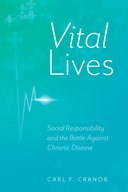
Professor Cranor has published widely on the use of science in regulatory and tort law. His most recent book, Vital Lives: Social Responsibility and the Battle Against Chronic Disease, was published by Oxford University Press in 2026. The book discusses various toxic substances that contribute to some major chronic afflictions, critiques the failures of government agencies to prevent toxic exposures that can lead to chronic illnesses, and explores how to assess different kinds of legal protections.
His Cambridge University Press book, Toxic Torts: Science, Law and the Possibility of Justice (2008), was critically acclaimed as achieving “the almost impossible goal of a learned, readable, and exciting book on the torturous interactions between law and science in tort litigation,” by Professor Ellen K. Silbergeld of the Johns Hopkins University Bloomberg School of Public Health. He published Regulating Toxic Substances: A Philosophy of Science and the Law (Oxford University Press, 1993, paperback 1997), edited Are Genes Us? The Social Consequences of the New Genetics (Rutgers University Press, 1994), and co-authored the U.S. Congress Office of Technology Assessment Report, Identifying and Regulating Carcinogens (1987). His articles have appeared in philosophic, scientific and law journals, including the American Philosophical Quarterly; Ethics, Law and Philosophy; Science and Engineering Ethics; Yale Law Journal; Industrial Relations Law Journal; Risk Analysis, Environmental Toxicology and Pharmacology; Risk: Health, Safety and the Environment; Virginia Environmental Law Journal; Jurimetrics, Law and Contemporary Problems; Plant Physiology; the European Journal of Oncology, and the American Journal of Public Health.
Professor Cranor has given presentations to the practicing bar, government officials, public interest groups, and professional groups. He has served as an expert witness and as consultant, and he was a co-author of an amicus brief in the U.S. Supreme Court case Dow Chemical Co., Monsanto Co., et. al. vs. Stephenson and Isaacson (2003). His involvement in cases also includes serving as part of the plaintiff’s team in Milward v. Acuity Specialty Products, where the First Circuit Court of Appeals called attention to and endorsed his presentation in the case; Harris v. CSX Corporation, where the West Virginia Supreme Court cited the First Circuit opinion from Milward, implicitly further endorsing his research; and National Oceanic and Atmospheric Administration and U.S. Department of Justice litigation over the Deepwater Horizon explosion and oil spill, which resulted in a $20.8 billion settlement with BP.
Professor Cranor was a Congressional Fellow and a consultant at the Office of Technology Assessment and has served on peer review panels at the National Science Foundation, the University of California Toxic Substances Research and Teaching Program, the UC Biotechnology Research and Teaching Program, and the Coordinating Board of the University of California Water Resources Center. He also served on two science advisory panels: the State of California’s Proposition 65 Science Advisory Panel (1989-1992) and the California Department of Health and Human Services’ Electric and Magnetic Fields Science Advisory Panel (1999-2002). He also served on the Institute of Medicine’s Committee to Evaluate Measures of Health Benefits for Environmental, Health, and Safety Regulation.
Professor Cranor was educated as an undergraduate in mathematics and as a graduate student in philosophy and in law, receiving a Master of Studies in Law from Yale.