
Showing 3,008 results

Alejandro Camacho, Robert L. Glicksman | October 27, 2026
Washington has a gift for cloaking unpopular ideas in appealing names. One recent example is the Bipartisan American Affordability and Jobs Act of 2026, or BAAJA, a sweeping “permitting reform” measure introduced this September by Sens. Shelley Moore Capito, Mike Lee, Sheldon Whitehouse, and Martin Heinrich. Once stripped of its deceptive branding, the bill is an out-and-out assault on the National Environmental Policy Act, the bedrock environmental law that has for more than 50 years required the federal government to look before it leaps.
Catalina Gonzalez | October 26, 2026
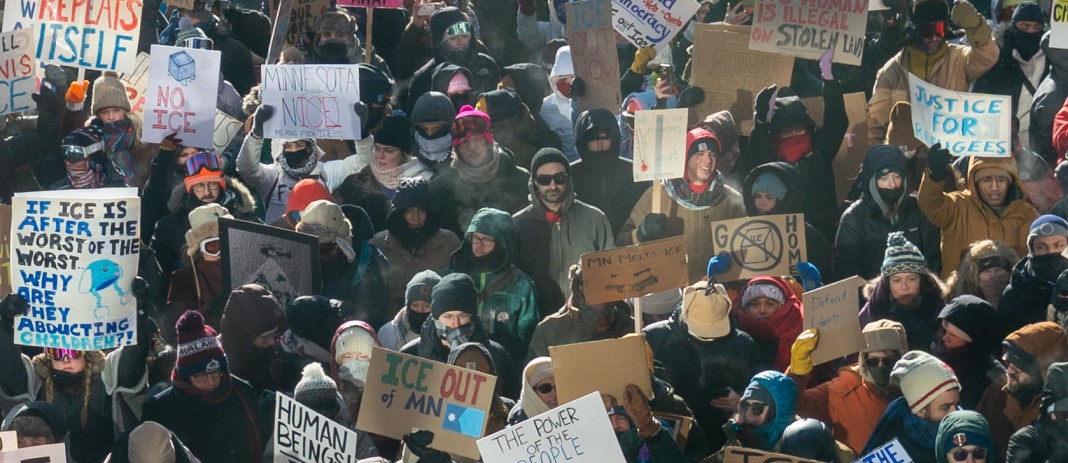
Over the past month, we celebrated the culture and many contributions of Latinos in the United States, which have touched every facet of American society. However, one month is not enough to truly honor the presence, full history, diversity, and intersectional identity of Latinos (or any other group, for that matter) in the United States. It's perhaps more important than ever to continue to reflect and learn from similar moments throughout U.S. history in which U.S. government policies have disenfranchised, criminalized, and called for the detention of Indigenous people and immigrants of many different backgrounds and countries of origin.

Nico Camacho | October 22, 2026
Recent polling shows that younger generations are increasingly distrustful of democracy. That lack of trust stems from real issues: The government can seem slow, corrupt, polarized, and unable to effectively respond to problems. Due to this, support for alternative forms of government can begin to grow. A strong leader promises quick solutions, fewer obstacles, and less chaos, while defenders of democracy seem to be losing the debate over governance. One primary driver of this distrust in democracy is the breakdown of ethical rhetoric. Modern speakers have lost touch with a productive use of rhetoric itself. When rhetoric loses this foundation, persuasion turns to manipulation, and democracy loses the basic conditions necessary for effective public debate.

James Goodwin | October 20, 2026
In 2024, the U.S. Supreme Court introduced a sea change to federal administrative law when it formally ended the Chevron deference doctrine in Loper Bright v. Raimondo. In its place, Loper Bright calls on judges to review agency interpretations of their statutory authority using de novo review. Two years later, we are still grappling with the full implications of this decision — not just for administrative law, but for our entire system of governance.

Arvind Salem, James Goodwin | October 7, 2026
As part of its aggressive campaign to “deconstruct the administrative state” on behalf of the Trump administration, the so-called Department of Government Efficiency controversially outsourced many crucial tasks to artificial intelligence (AI) programs like ChatGPT. In one episode, the program flagged funding for research on plastics industry lobbying and for digitizing audio reels by the Boston Symphony Orchestra while searching through National Endowment for the Humanities (NEH) grants to eliminate those supposedly promoting diversity, equity, and inclusion. Despite such glaring errors, DOGE fully adopted ChatGPT’s recommendations to terminate over 1,400 grants. These errors illustrate two intrinsic problems with AI: hallucination (an AI system producing nonsensical or inaccurate outputs) and sycophancy (an AI system modifying its response to align with users’ views). With AI use likely to become more prevalent within the federal government, existing legal safeguards — including those supplied by administrative law — will need to be updated and adapted to account for these problems.
Alejandro Camacho | October 6, 2026
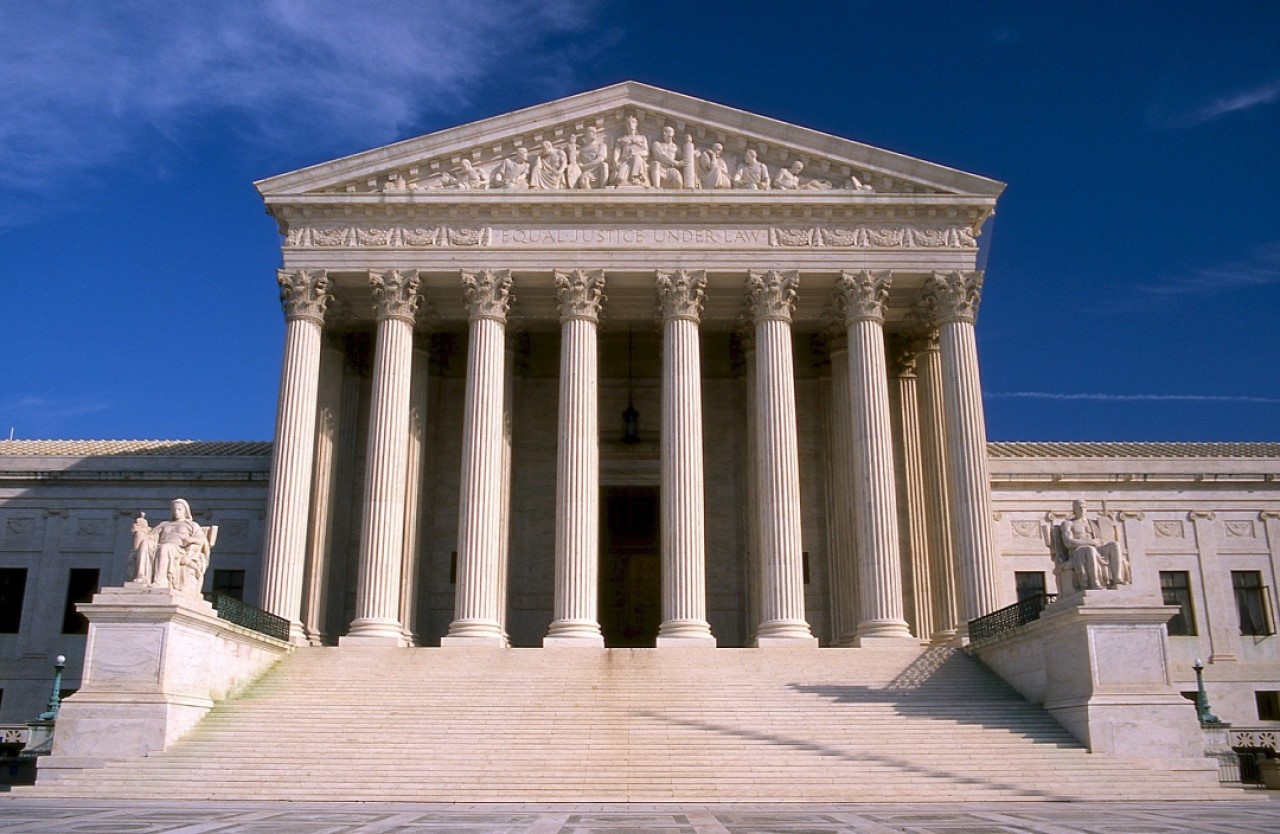
The U.S. Supreme Court heard oral arguments on October 5 in Suncor Energy v. County Commissioners of Boulder County. At issue is whether the city and county of Boulder, Colorado, can move forward with their state court case against defendants Exxon Mobil Corporation and Suncor Energy for allegedly deceiving the public about their products’ role in climate change. Some three dozen local governments and states throughout the United States have filed similar lawsuits in state court against fossil fuel companies over their alleged deception and false advertising. Although none of these cases have yet gone to trial, the Supreme Court decided to review Boulder’s case at the request of the oil company petitioners.
John H. Knox | October 5, 2026
When I teach domestic or international environmental law, I often ask students early on: Why should we protect the environment? What should the goal of environmental law be? Sometimes, they say that we should protect the environment for its own sake. The species and ecosystems that make up the natural world, and perhaps the natural world itself, should be recognized as having intrinsic value, apart from whatever value they provide human beings. This way of looking at the world has deep roots in Indigenous worldviews, and it has many adherents today. Its influence can be seen in laws such as the Endangered Species Act, which protect species regardless of whether they provide benefits in measurable, human terms. Nevertheless, students usually say that the most compelling reason to protect the environment is to protect human beings.

James Goodwin | October 2, 2026
This past summer, the United States endured a string of climate change-linked heat waves, contributing to an estimated 70 deaths and wrecking food production at farms and ranches across the country. Wildfires, many amplified by climate-driven changes in weather patterns, have already burned 8.4 million acres of land — an area larger than the state of Maryland — destroying homes and other property and subjecting tens of millions of Americans to hazardous air pollution. With disasters like these, it is easy to see how various studies have pinned the average household cost of climate change at well over $1,000 per year. If the oil and gas industry has its way at the U.S. Supreme Court, those households — rather than Big Oil itself — will continue footing that bill.

Achinthi C. Vithanage | September 30, 2026
Those of us who teach environmental law, be it domestic or international, are compelled to revisit how we teach those courses along with how we even choose to engage our students in these perilous times. This exercise is all the more difficult given the dejection left in the wake of a debilitating bombardment of bad news stories about our field.