
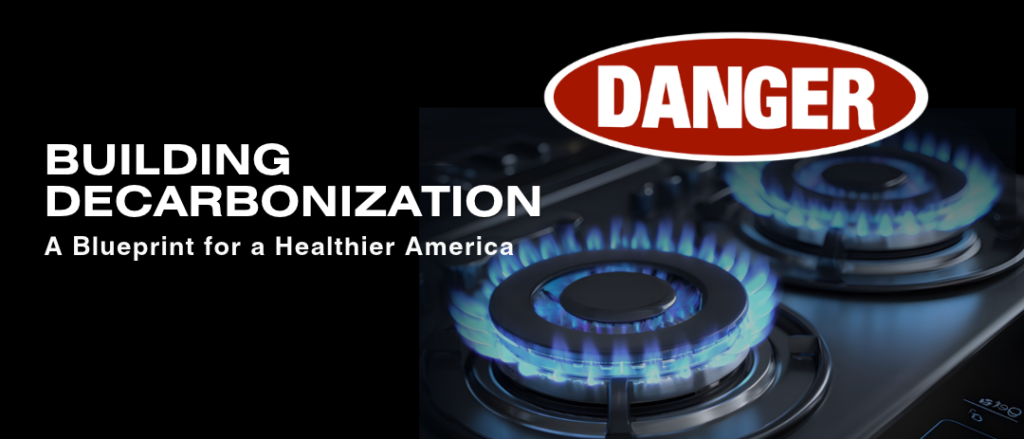
WASHINGTON, D.C. and ST. PAUL, MINN. — Today, scholars from the Center for Progressive Reform and the Public Health Law Center published a new paper that explores how state and local governments can help improve our health by decarbonizing the buildings in which we live, work, and learn.
The paper, Building Decarbonization: A Blueprint for a Healthier America, explains that burning fossil fuels in buildings for heating, cooking, hot water, and other purposes emits air pollution that can harm our health and our environment. Resulting health problems can include cancer, strokes, heart disease, asthma attacks, and more.
“Indoor air pollution from burning fossil fuels in our homes and other buildings isn’t incidental or theoretical,” said Ernesto Villaseñor, Senior Policy Analyst at the Public Health Law Center and co-author of the paper. “This can significantly harm our health and decrease our overall quality of life.”
The authors explain this challenge is not intractable.
“A growing number of states and local governments have attempted to address these impacts by limiting fossil fuel use in new buildings in favor of electric heating and cooking,” said Hannah Wiseman, a Member Scholar at the Center for Progressive Reform and co-author of the paper. “Indeed, there are a number of constructive policy solutions available to incentivize installation of more efficient electric appliances and equipment that can save residents money and improve public health.”
Such policy solutions can include but are not limited to:
- Building codes that restrict the use of fossil fuel appliances in new buildings;
- Building performance standards; and
- Limits on air pollution emissions from buildings.
Because of pushback from the oil and gas industry, implementing decarbonization is not without its legal risks, particularly given ongoing judicial scrutiny of various decarbonization and electrification ordinances, laws, and regulations.
“The fossil fuel industry, their front groups, and their policymaker allies have been pulling out all the stops to try to prevent a clean energy transition in our homes, businesses, and other buildings,” said Alexandra Klass, a Center for Progressive Reform Member Scholar and co-author of the paper. “Thankfully, state and local governments can and already have successfully navigated these challenges, and there’s plenty more they can do.”
The authors help policymakers and advocates do just that by exploring the current legal landscape and assessing policy options that are more or less likely to survive judicial scrutiny.
“There are a lot of opportunities to improve our health, our environment, and our wallets by upgrading buildings,” said Daniel Carpenter-Gold, Senior Staff Attorney at the Public Health Law Center and co-author of the paper. “Now it’s time to get to work and help everyone realize the promise of healthier buildings and lives.”
Building Decarbonization: A Blueprint for a Healthier America is available at https://progressivereform.org/publications/building-decarbonization-blueprint-for-a-healthier-america/.
# # # # #
The Center for Progressive Reform harnesses the power of law and public policy to create a responsive government, a healthy environment, and a just society. Read CPRBlog, follow us on Bluesky, Facebook, LinkedIn, and Instagram, and subscribe to our email list.
The Public Health Law Center collaborates with others to reduce and eliminate commercial tobacco, promote healthy food, support physical activity, pursue climate justice, and address other causes of chronic disease. We work with Tribal, national, state, and local partners to create healthier communities around the country. Visit www.publichealthlawcenter.org for more information.
